As fall approaches, advice about preventing colds becomes widespread. The problem is that many of them are a mix of proven and unproven, and both are often presented with equal confidence. Some behaviors have been repeatedly shown to be effective in multiple studies, while others are comfortable, but the evidence for reducing infections themselves is thin.
This article is organized based not on “what is good,” but on “how believable the claim is.” Ranking the evidence base for preventive action makes it easier to decide where to spend your time and effort.

Summary
- Measures with relatively clear evidence: hand hygiene, respiratory etiquette, influenza vaccination, and keeping distance from sick people.
- The reason colds increase in the fall is a combination of indoor crowding, low humidity, and seasonal viruses rather than the cold itself.
- The preventive effect of high-dose vitamin C on the general public and the common belief that cold wind is the cause of colds have little basis.
- Antibiotics are ineffective for colds and only cause side effects and resistance issues.
- Colds and allergic rhinitis differ in the pattern of fever, sore throat, and symptom persistence.
1. Preventive actions divided by evidence level
| Grade | Item | Nature of the evidence |
|---|---|---|
| A — Repeatedly supported | Wash hands with soap, disinfect hands with alcohol | Block contact transmission. Consistent reductions in community studies and systematic reviews |
| A — Repeatedly supported | Influenza vaccination | Flu target. Does not work against common cold viruses |
| B — Reasonable basis | Respiratory etiquette (coughing into your sleeve), keeping your distance when showing symptoms | Reduced droplet exposure. Individual measurement is difficult, but the direction is clear |
| B — Reasonable basis | Enough sleep | An association between short sleep and susceptibility to infection has been observed in several studies. |
| C — context dependent | Indoor ventilation, maintaining humidity | Towards lowering the exposure concentration in a closed environment. Effect variation across conditions |
| D — low evidence | Take high doses of vitamin C regularly | The prevention effect for the general public is not clear. |
| D — low evidence | Prevent colds with a scarf and warm clothes | It is helpful for the feeling, but the basis for preventing the infection itself is weak. |
| E — Not recommended | Antibiotics for colds | Ineffective against viruses. Only the risk of side effects and resistance remains. |
The rating is an indication of “how confirmed the story is” rather than an absolute ranking. Being a D grade isn’t harmful, but it would be a waste to skip the A grade actions and only focus on D.
2. The real reason why colds increase in fall
2-1. Time to gather indoors
As temperatures drop, we close windows and spend more time indoors. If people are together in the same space for a long time, the chance of contact with droplets increases. Overlapping school and new semester schedules are also a factor that increases transmission within households through children and adolescents.
2-2. Low humidity
In dry air, droplets get smaller quickly and remain suspended in the air longer. At the same time, the ciliary movement of the nasal mucosa slows down, prolonging the time the virus stays on the mucous membrane. In other words, rather than the cold being the problem, the dryness that comes with the cold and living indoors create the conditions.
2-3. Seasonality of the virus
An increasing pattern is observed for rhinoviruses in spring and fall, and for influenza and RSV after late fall. Because the types of viruses prevalent change depending on the season, the identity of the symptoms collectively called the “fall cold” also varies depending on the season.
3. A closer look at common beliefs
- “I caught a cold because of the cold wind.”: A cold is a viral infection. Although there are experimental reports that exposure to low temperatures affects the defense function of the nasal mucosa, cold alone does not cause a cold without a virus. Dressing warmly makes sense for comfort and to prevent hypothermia.
- “You won’t get sick if you take a lot of vitamin C.”: The repeated conclusion is that the preventive effect is not clear in general adults. There are reports that the period of illness is somewhat shortened in people who take it regularly.
- “If you take antibiotics in the early stages of a cold, you will get better quickly.”: Antibiotics act on bacteria. Since most colds are viruses, the course cannot be changed, and side effects such as diarrhea and rashes and resistance problems remain.
- “If you sweat it all out, you’ll get better.”: Excessive sweating during fever can lead to dehydration. Staying hydrated and resting is a safer option.
- “Gargling salt water prevents colds.”: It is suitable for relieving throat discomfort, but there is limited evidence to use it as a means of preventing infection.
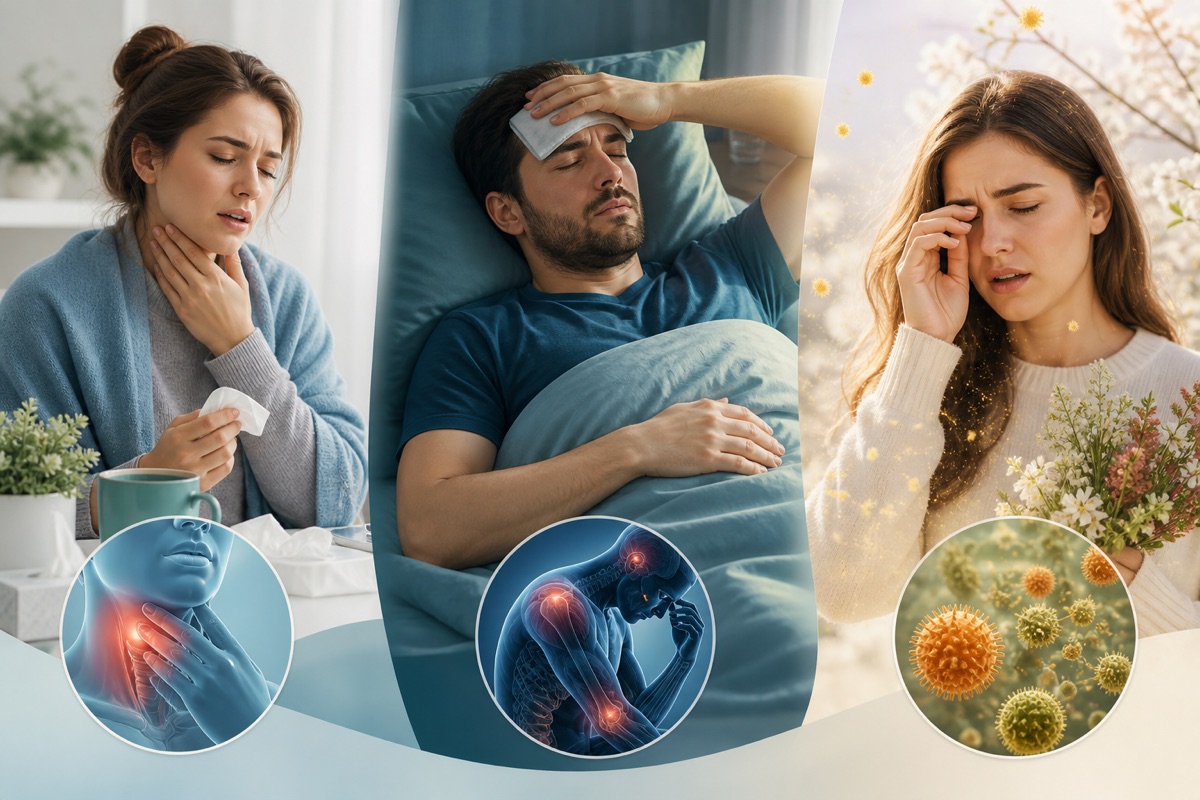
4. Is it a cold or allergic rhinitis?
In the fall, the two are often confused. People may keep taking general cold remedies for symptoms that would improve with antihistamines, or conversely, people may mistake a cold for rhinitis and ignore it.
| Category | Cold | Allergic rhinitis |
|---|---|---|
| Start | Gradually over several days | Suddenly, immediately after exposure to a specific environment |
| Fever | May be accompanied by mild fever | Usually none |
| Sore throat | Common in the beginning | Rare; throat itchiness may occur |
| Sneeze | Usually sporadic | Often occurs in repeated bursts. |
| Runny nose | Tendency to gradually thicken | Stay clear |
| Itchy eyes and nose | Rarely | Characteristic |
| Period | Usually improves within 7 to 10 days | Lasts for weeks or as long as exposure continues |
If symptoms continue in the same pattern for more than two weeks, it is worth suspecting rhinitis rather than a cold.
5. Signs you need to go to the hospital
- When a fever of 38 degrees or higher persists for more than 3 days
- When you are short of breath or have chest pain
- When symptoms that were getting better get worse again and facial pain and yellowish nasal discharge appear
- When ear pain or hearing loss occurs together
- When only one side of the neck is severely swollen and it is difficult to swallow or open the mouth
- When symptoms begin in those over 65 years of age, during pregnancy, with chronic lung or heart disease, or in an immunocompromised state
The last item is when it is safer to check the progress quickly, regardless of the severity of symptoms.
Frequently Asked Questions
Q. Do masks help prevent fall colds? A. The evidence is relatively clear in favor of wearing it by symptomatic people to reduce droplet emissions. The effectiveness of preventive wear by healthy people varies from study to study. It is realistic to use it selectively in crowded indoor spaces.
Q. Can I exercise when I have a cold? A. If the symptoms remain at the top of the neck (runny nose, stuffy nose, mild sore throat) and there is no fever, it is generally okay to move lightly at lower intensity. If you have a fever, full-body muscle pain, or cough that extends to your chest, it is better to rest.
Q. When is the best time to get the flu vaccine? A. It takes about two weeks for antibodies to form after vaccination, and domestic epidemics generally occur in the winter. If you complete the vaccination in the fall, the timing will be fine. Please check the information provided by the Korea Disease Control and Prevention Agency for the recommended timing and target of vaccination each year.
This article is general health information and is not a substitute for individual medical care. If symptoms persist or worsen, please seek treatment at a medical institution.