Some people come to the clinic saying they have been taking medication for what they thought was rhinitis for a long time, yet their nasal congestion keeps getting worse and they can no longer smell well. On endoscopy, we sometimes see smooth, soft growths inside the nose that look like grapes. These are nasal polyps.
The name may make them sound like tumors, but most nasal polyps are benign inflammatory lesions. However, once they form, they rarely go away on their own and they often come back, so ongoing care is needed. Below we outline the causes, symptoms, and the course of treatment.

Summary
- Nasal polyps are benign growths caused by chronic inflammation of the sinus and nasal lining
- Congestion on both sides, reduced sense of smell, runny nose, and postnasal drip are typical symptoms
- Medication centered on nasal steroids is the foundation of treatment, with short courses of oral steroids when needed
- If medication does not control them, endoscopic sinus surgery is discussed, and care continues after surgery
- If a growth appears on only one side or comes with blood-tinged discharge, other conditions need to be ruled out
1. What are nasal polyps?
Nasal polyps form when the lining of the nose or sinuses swells from long-standing inflammation and hangs down. They have a smooth, translucent surface and cause little to no pain when touched. They usually start around the ethmoid sinuses and grow out into the nasal cavity; as they get larger, they may be visible even near the nostril opening.
Because nasal polyps usually occur together with chronic sinusitis, they are medically classified and managed as “chronic rhinosinusitis with nasal polyps.” They mainly occur in adults, and when nasal polyps are found in a child, other conditions such as cystic fibrosis need to be checked.
2. Why they form and related conditions
The exact cause of nasal polyps is not yet fully understood, but persistent inflammation of the lining is thought to be at the center. They are more common in the following situations.
- Asthma: A considerable number of people with nasal polyps also have asthma, and the two conditions share a similar type of inflammation
- Sensitivity to aspirin and some anti-inflammatory pain relievers: Asthma, nasal polyps, and a reaction to pain relievers sometimes occur together
- Eosinophilic inflammation: The type with many eosinophils in the blood or tissue tends to recur more often
- Allergic rhinitis: Rather than being a direct cause, it may act as a factor that keeps inflammation going
In Korean patients, the non-eosinophilic type also accounts for a substantial share, and response to treatment and tendency to recur may differ by type.
3. Symptoms of nasal polyps
| Symptom | Features |
|---|---|
| Nasal congestion | Both sides stay blocked and gradually get worse |
| Reduced sense of smell | Smells and the taste of food become dull; an important clue to nasal polyps |
| Runny nose and postnasal drip | Thick mucus runs out the front or down the back of the throat |
| Facial pressure | When sinusitis is also present, the forehead and cheeks feel heavy |
| Sleep problems | Congestion leads to more mouth breathing and snoring |
A reduced sense of smell is more than the inconvenience of not smelling things. Food may taste bland, which can change appetite and eating habits, and not noticing spoiled food, gas leaks, or smoke can also affect everyday safety. If you live alone, it is a good idea to check your gas detector and smoke alarm.
Because symptoms progress slowly, many people get used to the discomfort for a long time and only seek care after their sense of smell has dropped significantly. If rhinitis medication helps for a while but the nose keeps getting blocked again, it is worth having the inside of the nose checked with an endoscope.
4. Diagnosis and treatment
Diagnosis starts with nasal endoscopy to directly check the location and size of the polyps. A sinus CT scan is used to assess how far the inflammation has spread, and allergy and blood tests are done as needed. If a polyp is on only one side or does not look typical, a biopsy is performed.
4-1. Medication
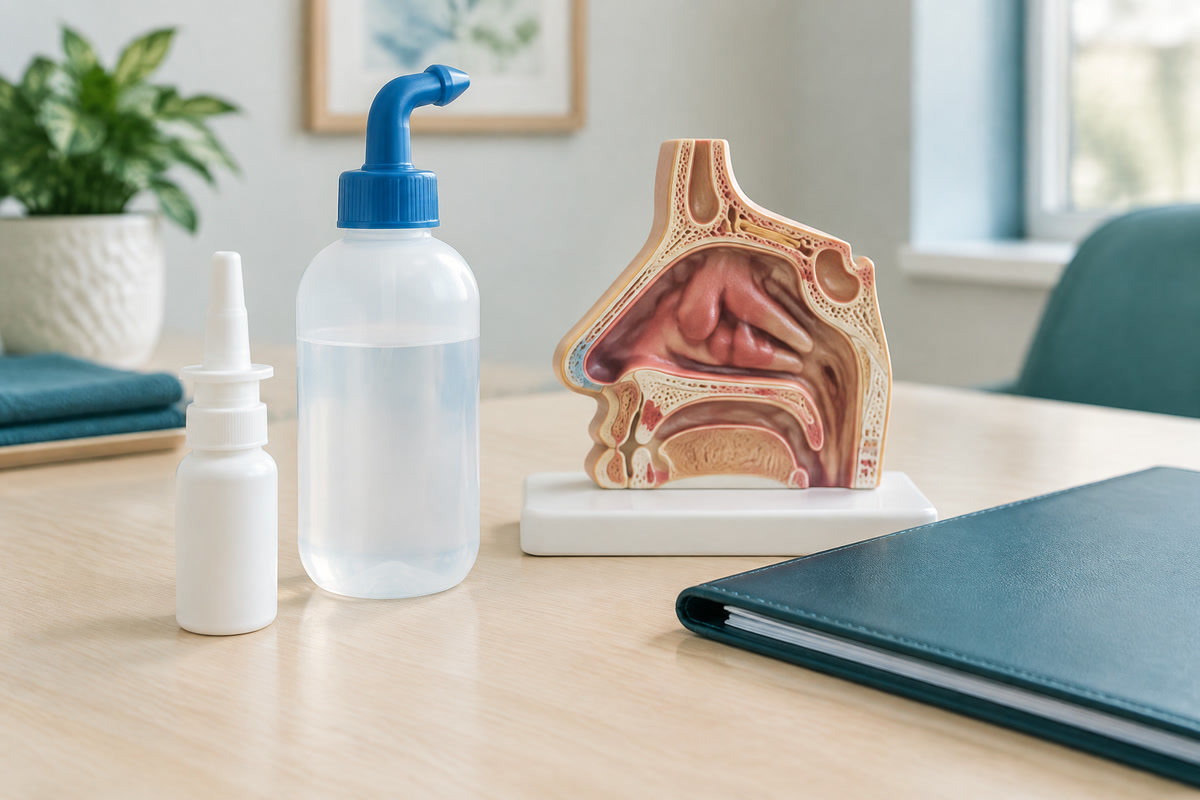
- Nasal steroid sprays: The foundation of treatment, used to reduce polyp size and congestion. They need to be used consistently for several weeks or longer to take effect
- Saline rinses: Wash out secretions and help medication reach the lining
- Oral steroids: A short course when symptoms are severe can shrink polyps quickly, but because of side effects, repeated use is decided carefully
- Biologics: An injectable treatment may be considered for some patients with severe disease that recurs even after surgery, and the decision is made after checking eligibility criteria and insurance requirements
4-2. Surgery
If congestion and reduced sense of smell persist despite an adequate period of medication, endoscopic sinus surgery is discussed. The goal of surgery is to remove the polyps and widen the blocked sinus openings to restore ventilation and drainage. After surgery, medication can reach further into the sinuses, which can also make ongoing care easier.
However, because nasal polyps are an inflammatory condition, surgery is not the end of treatment. Continuing nasal steroids and rinses after surgery and having regular endoscopic checkups are important for managing recurrence.
5. Signs that you should see a doctor
Seek care promptly in the following situations.
- There is a growth in only one nostril, or congestion on one side keeps getting worse
- Blood-tinged nasal discharge or nosebleeds keep recurring
- Swelling around the eyes, changes in vision, or double vision appear
- Severe headache or high fever is also present
- You have experienced shortness of breath or worsening asthma after taking a pain reliever
Frequently Asked Questions
Q. Can nasal polyps turn into cancer? A. Typical nasal polyps on both sides are benign inflammatory lesions and rarely turn into cancer. However, when a growth is on only one side, a biopsy may be needed to distinguish it from other tumors.
Q. Will they come back after surgery? A. Nasal polyps commonly recur. Consistent medication and regular checkups after surgery help delay recurrence or catch it early.
Q. Will my lost sense of smell come back? A. A reduced sense of smell caused by polyps blocking the airflow often improves after treatment. However, the degree and speed of recovery vary from person to person, and recovery may be slower if the problem has been present for a long time.
Related reading
- Loss of Smell: Causes to Consider and the Order of Evaluation
- Sinusitis Symptoms and Treatment — When Are Antibiotics Needed, and for How Long?
- Postnasal Drip Syndrome: Causes and Care for Mucus Running Down the Throat
This article is general health information and is not a substitute for individual medical care. If symptoms persist or worsen, please seek treatment at a medical institution.