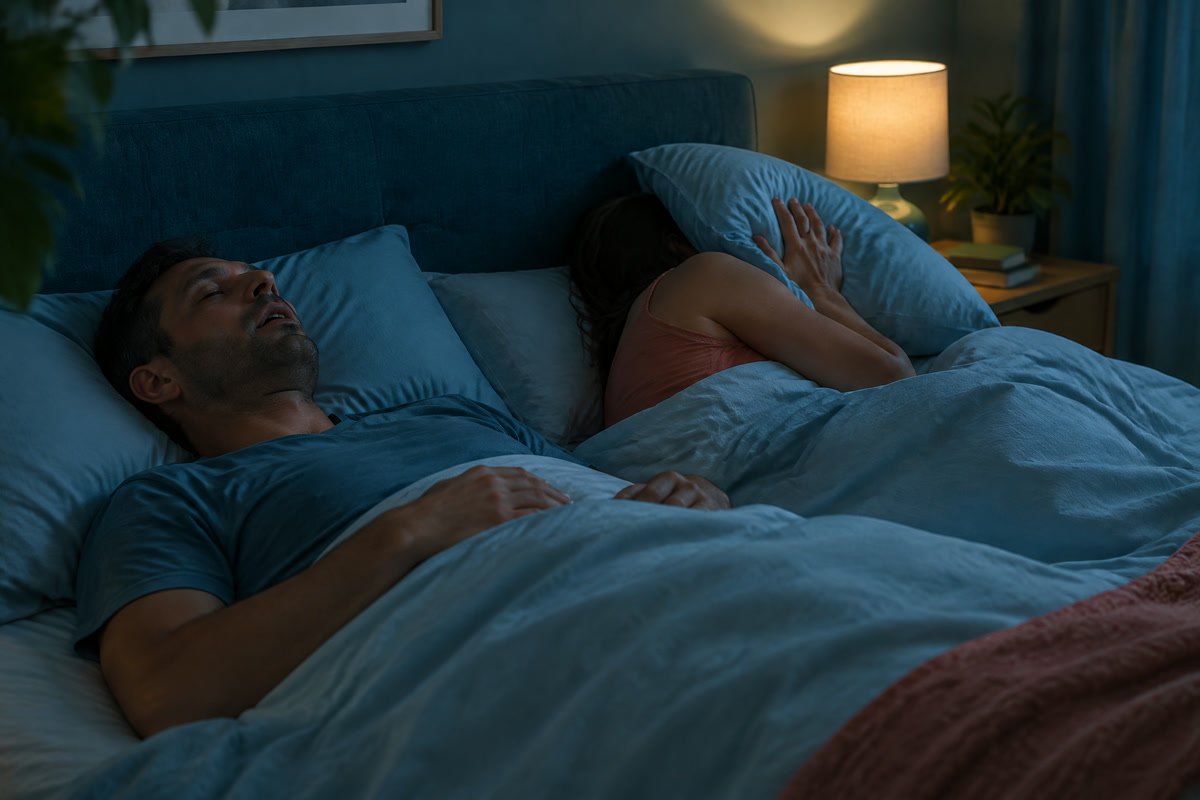
Snoring is often noticed first by the family member sharing the bedroom rather than by the snorer. It is common in adults, but if the noise is loud enough to disturb your family’s sleep, or you keep waking up feeling unrefreshed, it is worth looking into the cause.
Much of snoring is related to lifestyle habits, which means there is room to manage it yourself. This article covers how snoring happens, its causes, and lifestyle changes that can help, along with the signs that suggest sleep apnea rather than simple snoring. Testing and treatment costs are covered in a separate article.
Summary
- Snoring is the sound of surrounding tissue vibrating as air passes through the upper airway, which narrows during sleep
- Weight gain, alcohol, sleeping on your back, and nasal congestion are the main aggravating factors
- Sleeping on your side, managing your weight, and drinking less before bed are the basic fixes
- Witnessed pauses in breathing, severe daytime sleepiness, and high blood pressure are signs that sleep apnea testing is needed
- Whether lifestyle changes alone are enough depends on the severity of symptoms and test results
1. Why does snoring happen?
When you are awake, the muscles around the throat keep the airway steadily open. When you fall asleep, these muscles relax, and tissues such as the soft palate, uvula, and base of the tongue sag backward, narrowing the airway. As air moves quickly through the narrowed passage, the loose tissue vibrates and makes a sound. That is snoring.
If the airway narrows further and airflow temporarily drops sharply or stops, it becomes sleep apnea. In other words, simple snoring and sleep apnea can be seen as points on the same spectrum. Not everyone who snores has sleep apnea, but most people with sleep apnea also snore.
It is difficult to tell whether someone has sleep apnea from the loudness of the snoring alone. Breathing may be interrupted often even when the snoring is not very loud, and conversely, breathing itself may be relatively stable even when the snoring is loud. That is why it is important to consider both what family members observe during sleep and how you feel during the day.
2. Causes of snoring: structure and lifestyle
| Category | Cause | Explanation |
|---|---|---|
| Structural factors | Large tonsils, a long or floppy soft palate, a small jaw | Naturally narrow airway space |
| Nasal problems | Rhinitis, deviated septum, nasal polyps | Nasal congestion leads to sleeping with the mouth open |
| Weight | More fat around the neck | Presses on the airway from the outside when lying down |
| Alcohol and medications | Alcohol, sleeping pills, some sedatives | Relax the throat muscles further |
| Position | Sleeping on your back | Gravity pulls the tongue and soft palate backward |
| Other | Smoking, fatigue, aging | Swelling of the lining and loss of muscle tone |
Several factors often overlap. For example, if you usually snore lightly but your snoring got much worse during a period when you gained weight and had frequent evening drinks, lifestyle factors are likely playing a large role. On the other hand, if you are slim but have snored heavily since childhood, it is better to check for structural factors first.
3. Lifestyle changes you can try yourself
3-1. Sleep position
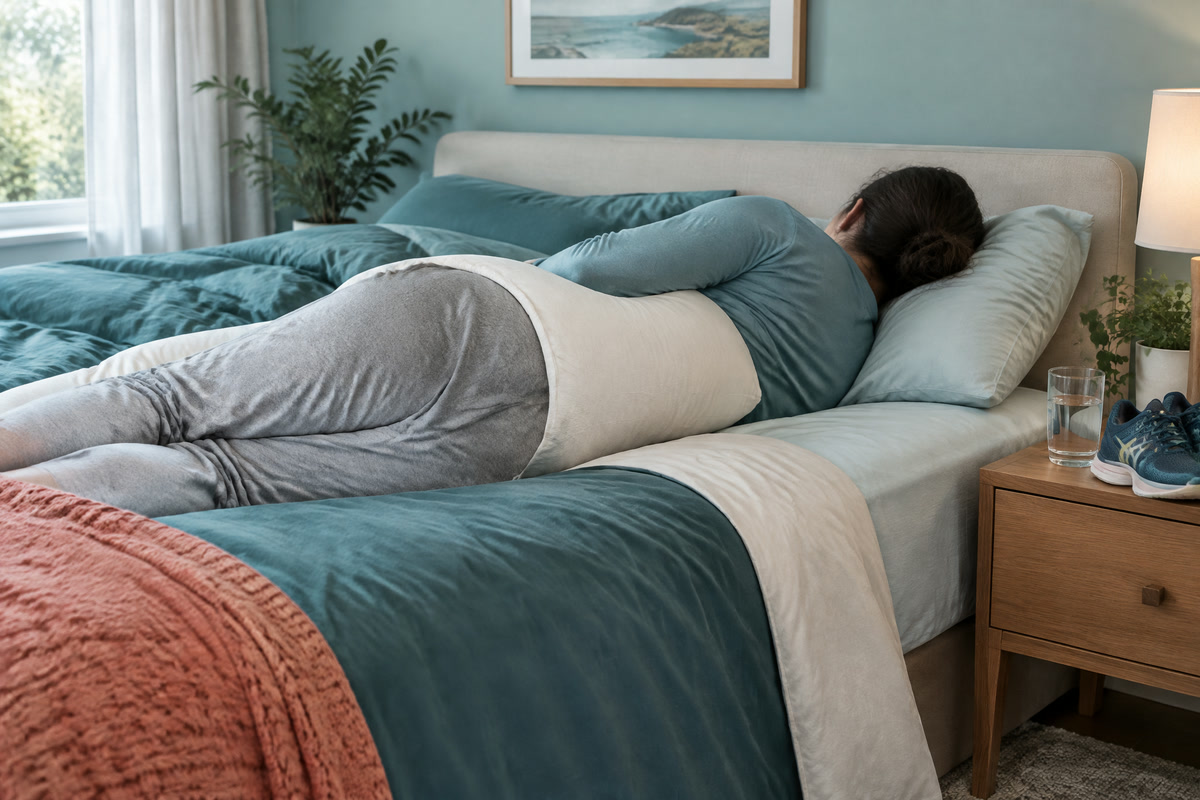
Lying on your back makes it easier for the base of the tongue and the soft palate to sag backward, which makes snoring worse for many people. In quite a few cases, simply sleeping on your side reduces the noise. Hugging a long pillow or placing a cushion behind your back can help keep you from rolling onto your back during the night. Avoid a pillow that is so high that it bends your neck.
3-2. Weight management
Weight gain also adds fat around the neck and tongue, which narrows the airway. In people who are overweight, losing weight has been reported to often reduce both snoring and the severity of sleep apnea. Steady diet control and regular exercise are better for keeping weight off than rapid weight loss.
3-3. Alcohol and medications
Alcohol relaxes the throat muscles and swells the nasal lining, making snoring worse. In particular, it is best to avoid drinking within 3 to 4 hours of going to sleep. Sleeping pills and some medications with sedative effects can have a similar effect, so if you take any medication, do not stop it on your own; talk with the doctor who prescribed it.
3-4. Managing nasal congestion and other habits
Rhinitis or nasal congestion makes you sleep with your mouth open, which worsens snoring. Saline rinses, managing indoor humidity, and treating rhinitis if needed can help. Smoking causes inflammation and swelling of the airway lining, so quitting is recommended. When you do not get enough sleep, muscle relaxation tends to increase during deep sleep, so a regular sleep schedule also matters.
Over-the-counter anti-snoring products work differently from person to person, and relying on them for a long time without identifying the cause can mean missing problems such as sleep apnea. If there is no change after about 2 to 3 months of lifestyle changes, it is better to see a doctor to identify the cause.
4. Signs that suggest sleep apnea
In the following situations, do not dismiss it as simple snoring; consult an ENT specialist or a sleep clinic.
- A family member has seen you stop breathing during sleep and then take a big gasping breath
- You feel very sleepy during the day despite getting enough sleep, or you get drowsy while driving
- You have morning headaches or a dry mouth, or you often wake up at night to urinate
- You also have high blood pressure, an irregular heartbeat, or diabetes
- You notice ongoing trouble concentrating or mood changes
The severity of sleep apnea is assessed with a sleep study (polysomnography), and depending on the results, treatment options such as CPAP, an oral appliance, or surgery are discussed. The right treatment depends on where the obstruction is and how severe it is, so no single approach suits everyone.
Frequently Asked Questions
Q. Is it okay if I snore only on days when I am tired? A. Occasionally snoring only on days when you are tired or have been drinking is common. However, if it becomes more frequent or someone notices pauses in your breathing, it should be checked.
Q. Will losing weight stop my snoring? A. If excess weight is a large part of the cause, snoring often decreases considerably after weight loss. If there is also a structural cause, weight control alone may not be enough.
Q. Do children snore for the same reasons? A. In children, enlarged tonsils and adenoids are a common cause of snoring, and the approach differs from that for adults. If a child snores often or seems to stop breathing, it is best to have it checked by an ENT clinic that sees children.
Related reading
- Sleep Apnea Symptoms Self-Check: Signs You Should Get Tested
- Snoring and Sleep Apnea Testing and Surgery Costs — What Korean Private Insurance Covers
- Mouth Breathing: How the Habit Affects Children and Adults
This article is general health information and is not a substitute for individual medical care. If symptoms persist or worsen, please seek treatment at a medical institution.