Many people worry after hearing during a health checkup or a visit for a cold that “the bone in the middle of your nose is crooked.” In fact, a perfectly straight septum is rare, and a considerable number of adults have some degree of deviation. The key question is not the deviation itself but whether it causes problems in daily life.
This article looks at what symptoms a deviated septum causes, how to tell it apart from other conditions with similar symptoms, and when surgery is worth considering versus when it is fine to watch and wait. Surgery costs and insurance are covered in a separate article, so here we focus on symptoms and decision criteria.

Summary
- A mild bend in the septum is common and does not need treatment if it causes no symptoms
- Persistent congestion on one side is the most typical symptom
- When swelling of the nasal lining from rhinitis is also present, symptoms feel worse
- If congestion remains despite adequate medication and a structural cause is confirmed, surgery is discussed
- The decision on surgery is made by weighing symptom severity, exam findings, and how much it affects your daily life
1. What is a deviated septum?
The septum is the partition that divides the inside of the nose into left and right sides. The front part is made of cartilage and the back part of thin bone. Differences in how fast the cartilage and bone grow during development, or an injury in childhood or adulthood, can cause this partition to bend or bulge to one side. When this bend obstructs airflow and causes symptoms, the condition is called a deviated septum.
The shape of the deviation varies from person to person. It may curve gently in a C shape, form an S shape that alternately blocks both sides, or have a sharp projection (spur) sticking out. Even with the same degree of deviation, how much discomfort it causes depends on where it is. In particular, a deviation toward the front, near the nostril opening, tends to cause significant symptoms even if it is small.
2. Deviated septum symptoms
Typical symptoms include the following.
- One-sided congestion: The side the septum bends toward is always more blocked, or with an S-shaped deviation, the two sides take turns being blocked
- Problems during sleep: You end up sleeping with your mouth open, snoring gets worse, and your mouth is dry in the morning
- Recurrent nosebleeds: The lining over the bulging area is directly exposed to airflow, dries out, and bleeds easily
- Recurrent sinusitis: When the area around the drainage pathways narrows, inflammation may not heal well
- Headache or facial pressure: This occurs rarely, when a projecting spur touches a structure on the opposite side
It is also worth remembering that nasal congestion is not unique to a deviated septum. When the inferior turbinates swell from allergic rhinitis, the passage on the deviated side becomes even narrower, and on the other side, the lining may thicken to fill the extra space. So in reality, structure and swelling of the lining often work together to cause symptoms.
3. Telling it apart from other causes of congestion
| Feature | Deviated septum | Rhinitis (swollen lining) |
|---|---|---|
| Pattern of blockage | The same side stays blocked | Switches sides or changes over time |
| Response to medication | Only partial improvement with sprays | Responds relatively well to nasal steroids and similar treatments |
| Associated symptoms | Nosebleeds, one-sided sinusitis | Sneezing, clear runny nose, itching |
| How it is confirmed | Endoscopy and CT to check the structure | Medical history, allergy testing, endoscopy |
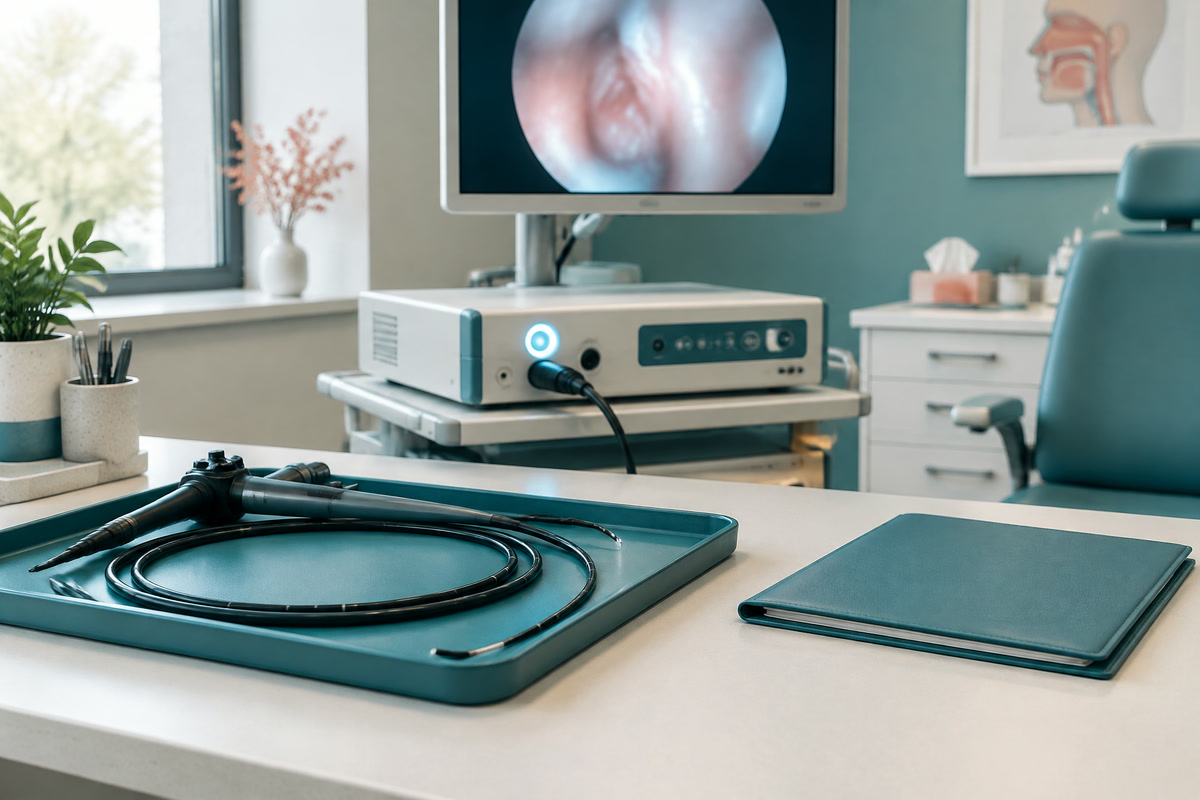
In the clinic, nasal endoscopy is used to check the location and degree of the deviation, swelling of the inferior turbinates, and whether nasal polyps are present. Comparing how much the passage opens up before and after spraying a decongestant helps estimate how much of the problem is structural versus due to the lining. A CT scan is taken when sinusitis is also present or when surgery is being considered.
4. When to watch and wait and when to discuss surgery
When it is fine to watch and manage with medication
- A deviation was found on examination, but congestion is minimal or mild
- Symptoms appear mainly during rhinitis flare-ups and are well controlled with medication
- Apart from congestion, there is no clear impact on sleep, exercise, or daily life
In these cases, the priority is reducing swelling of the lining with nasal steroid sprays, saline rinses, and managing allergy triggers. Nasal steroids need to be used consistently for at least several days before they take effect, so rather than trying them briefly and concluding they do not work, it is better to use them for the recommended period and then reassess. On the other hand, decongestant sprays that are easy to get at a pharmacy bring quick relief, but using them for more than a few days in a row can cause rebound congestion, which can make it harder to distinguish from a structural problem.
When surgery (septoplasty) is discussed
- One-sided congestion persists despite adequate medication for several weeks or more
- Congestion causes heavy mouth breathing and snoring during sleep and lowers sleep quality
- The deviation blocks sinus drainage, leading to recurrent sinusitis
- Nosebleeds keep recurring from a bulging area
- Nasal congestion gets in the way of using sleep apnea treatment devices
Septoplasty is surgery that trims and reshapes part of the deviated cartilage and bone to widen the passage, and in some cases enlarged inferior turbinates are reduced at the same time. Congestion often improves after surgery, but the degree varies from person to person, and if rhinitis is also present, medication may still be needed after surgery. For adolescents who are still growing, the timing of surgery is decided carefully, taking into account the effect on nasal growth.
5. Signs that you should see a doctor
In the following situations, do not assume it is just a simple deviation; see a doctor.
- One-sided congestion with persistent blood-tinged discharge
- A change in the shape of the nose or new congestion after a nasal injury
- Facial pain, high fever, or swelling around the eyes
- Being told that you stop breathing during sleep, or severe daytime sleepiness
Frequently Asked Questions
Q. I was told my septum is deviated. Do I need surgery if I have no symptoms? A. In most cases, surgery is not needed if you have no symptoms. Deviation is a common finding, and whether to treat it depends on how much discomfort it causes.
Q. Does a deviated septum get better on its own? A. The structure itself does not straighten out on its own. However, controlling swelling of the lining can reduce symptoms considerably in some cases, so medication is tried first.
Q. Will surgery also cure my rhinitis? A. Septoplasty widens the structural passage and does not change an underlying allergic tendency. Rhinitis symptoms may still need ongoing management after surgery.
Related reading
- Mouth Breathing: How the Habit Affects Children and Adults
- Vasomotor Rhinitis: A Non-Allergic Runny Nose Triggered by Temperature Changes and Irritants
- Managing Allergic Rhinitis in Children — What Not to Miss During Growth
This article is general health information and is not a substitute for individual medical care. If symptoms persist or worsen, please seek treatment at a medical institution.