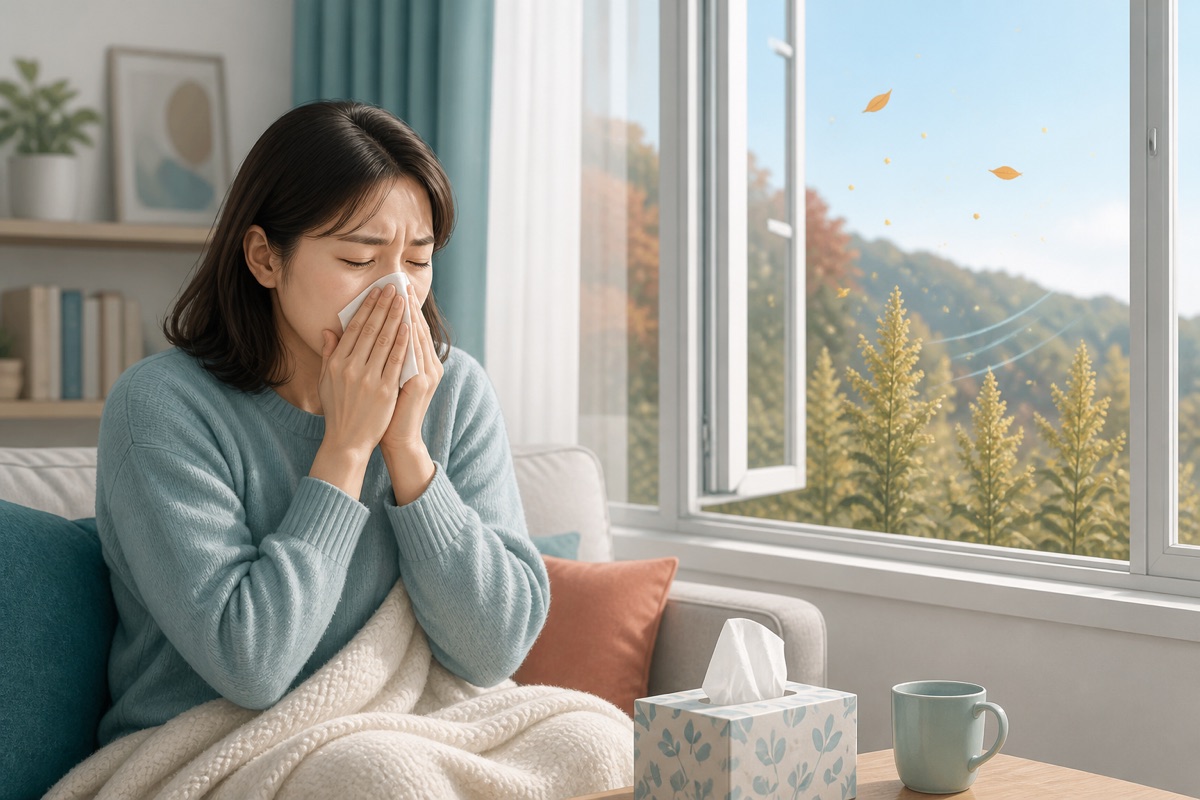
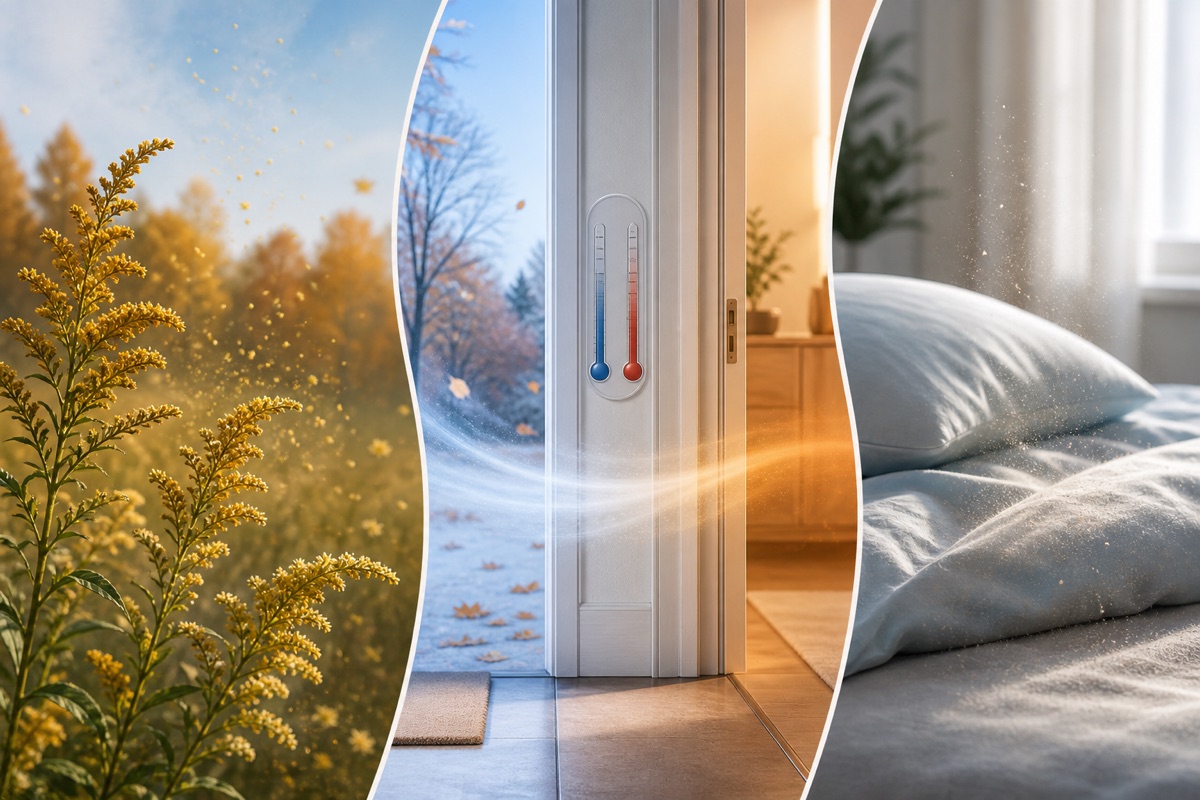
There are three main reasons why rhinitis gets worse during seasonal changes. The daily temperature range is more than 10 degrees Celsius, fall weed pollen starts blowing from late August, and exposure to indoor allergens increases as windows are closed. These three have different pathways through which they act, so preparation methods also differ depending on which one is the main cause.
Below, we’ll explain in order how to tell the difference between the three causes and the most effective preparations you can take before symptoms begin.
Summary
- Diurnal temperature variation: The nose reacts to temperature changes. Clear runny nose and sneezing are concentrated in the morning, and allergy tests are often negative.
- Pollen type: Weed pollen from late August to October. Characterized by itchy eyes
- Indoor type: dust mites and mold. Symptoms vary depending on location (home, bedroom) rather than season
- Preparation is most effective when started 2-3 weeks before symptom onset
1. How are the three causes different?
1-1. Daily temperature fluctuations – rhinitis, not allergies
The blood vessels of the nasal mucosa are controlled by the autonomic nerves. When cold air enters, the blood vessels contract, and when indoors, they expand. When the weather continues, such as 15 degrees in the morning and 27 degrees during the day, this process repeats several times a day. As a result, mucous membranes swell and secretions increase.
This condition is not an allergic reaction, so allergy tests come back negative. In clinical practice, it is classified as vasomotor rhinitis (non-allergic rhinitis), and the response to antihistamines is often not as good as allergic rhinitis. This applies to many people who say, “The test didn’t show anything, but my nose is still stuffy.”
1-2. Fall pollen — particles are smaller than spring pollen
The main culprits of fall pollen in Korea are ragweed, mugwort, and Japanese hop. Based on the pollen calendar of the Korean Asthma and Allergy Society, the concentration peaks from late August to mid-October.
The particles are smaller than spring tree pollen, so they easily reach deep into the nasal cavity and lower respiratory tract. Therefore, in the fall, it is more common than in the spring to experience not only nasal symptoms but also cough and worsening asthma.
1-3. Indoor Allergens — Look at the Place, Not the Season
As temperatures drop, ventilation decreases and time spent indoors increases. House dust mites thrive at relative humidity above 60% and temperatures of 20 to 25 degrees Celsius, and bedrooms are close to this when heating begins.
The distinction is simple. If symptoms worsen at home and improve outdoors, an indoor trigger is more likely. If they worsen outdoors, pollen is more likely.
Comparison by cause
| Category | Daily temperature range | Pollen type | Indoor type |
|---|---|---|---|
| When it gets worse | Immediately after waking up, when temperature changes suddenly | After outdoor activities, on a dry, windy day | When going to bed, cleaning |
| Eye symptoms | Almost none | Itching and redness are common | Possible |
| Allergy testing | Negative | Weed antigen positive | Mite and mold positive |
| Period | Weeks of change of seasons | Late August – October | Year round, worse in winter |
| Priority response | Temperature buffering | Block exposure and clean after returning home | Bedding and humidity management |
2. A timing-based preparation plan
2-1. Two to three weeks before symptoms start (mid to late August)
The reason why allergic rhinitis treatment guidelines recommend that patients with seasonal allergies begin anti-inflammatory treatment before the pollen season is because it is easier to control inflammation by intervening before it has already established itself in the mucous membrane. If the same symptoms repeat at the same time every year, it is better to look at the calendar and act in advance.
What we need to do during this time is clean up the environment. Wash bedding in water above 60 degrees, and check humidifier and air purifier filters that were not used during the summer.
2-2. Beginning of symptoms (September)
- Indoor humidity 40~50%: If it exceeds 60%, mites and molds increase, and if it falls below 30%, mucociliary movement decreases. Although this is a narrow range, there is a big difference in feeling.
- Physiological saline nasal irrigation 1-2 times a day: Physically removes adsorbed antigens. Since it is not a drug, there are few restrictions when combined with other treatments.
- Immediately after returning home, wash your face and shake off your outerwear.: If you are the pollen type, this one habit will noticeably reduce the amount of pollen entering the room.
- Avoid sudden exposure to cold air immediately after waking up: There are many people who experience fewer morning symptoms in the daily temperature range.
2-3. After symptoms settle (after October)
At this stage, it is difficult to reverse through environmental management alone. If mucous membrane edema persists, the sinus discharge passage may be blocked and secondary sinusitis may occur. If it continues for more than 3 weeks, it is best to check the condition.
3. Signs that you need medical attention
The following items are cases that cannot be explained by simple seasonal rhinitis.
- Persistent blockage of only one side of the nose (possible structural cause or intranasal lesion)
- Recurring blood in the nose
- Yellowish runny nose and facial pain that lasts for more than 10 days or gets better and then gets worse again
- A marked decrease in sense of smell
- Using commercially available vasoconstrictor spray daily for more than 2 weeks
That last item is easy to miss. If you use vasoconstrictors for a long time, their effectiveness may decrease and you may develop drug-induced rhinitis, which is more clogged than before use. This condition is difficult to distinguish on your own because the symptoms overlap with seasonal rhinitis.
Frequently Asked Questions
Q. Does seasonal rhinitis get worse if it repeats every year? A. Not necessarily. However, if the inflammation of the nasal mucosa does not sufficiently subside each year and the next season begins, the symptom period tends to be prolonged. If the duration of symptoms increases each season, it is necessary to check the causative antigen.
Q. My allergy test showed nothing, so why does my nose get stuffy every year when the seasons change? A. It may be vasomotor rhinitis that responds to temperature changes themselves. Allergy tests come back normal, and environmental responses such as temperature buffering and nasal irrigation, as well as topical medication adjustments depending on the condition, tend to be more helpful than antihistamines.
Q. Does using an air purifier improve pollen rhinitis? A. It helps reduce the concentration of pollen that enters the room. However, since pollen sticks to clothes and hair, a purifier alone is not enough and must be used in conjunction with cleaning habits upon returning home to be effective.
This article is general health information and is not a substitute for individual medical care. If symptoms persist or worsen, please seek treatment at a medical institution.