Discomfort during nasal irrigation usually has one of three causes: The salt concentration is incorrect, the solution is too cold, or the irrigation pressure is too high. Correcting these three factors resolves most discomfort.
There is one more condition directly related to safety. The type of water used for irrigation. Although infection is rare, potentially fatal cases have been linked to nasal irrigation with untreated tap water, so it should never be used directly.

Summary
- Concentration: 0.9% isotonic solution is standard. Use of a premeasured saline packet is recommended
- Temperature: 32-37 degrees. Cold water is the biggest cause of pain and dizziness
- Pressure: Don’t squeeze, let it flow. High pressure can push fluid toward the eustachian tube
- Water: Only commercially available saline solution, sterilized water, distilled water, or water that has been boiled for at least 1 minute and then cooled. Do not use tap water directly
- Not recommended after acute otitis media or recent sinus surgery
1. What does nasal irrigation do?
It physically washes away pollen, dust, pathogens, and inflammatory mediators attached to the mucus layer on the nasal surface, and lowers the viscosity of mucus to help natural discharge through ciliary movement. There is accumulated evidence that it lowers symptom scores and drug usage in allergic rhinitis and chronic rhinosinusitis, so it is widely mentioned as an adjuvant therapy in domestic and international treatment guidelines.
Since it is not a drug, there are few restrictions on combining it with other treatments, and when using a topical steroid spray, spraying it after irrigation allows the drug to reach the mucous membrane better.
2. Three conditions
2-1. Concentration — 0.9% is default
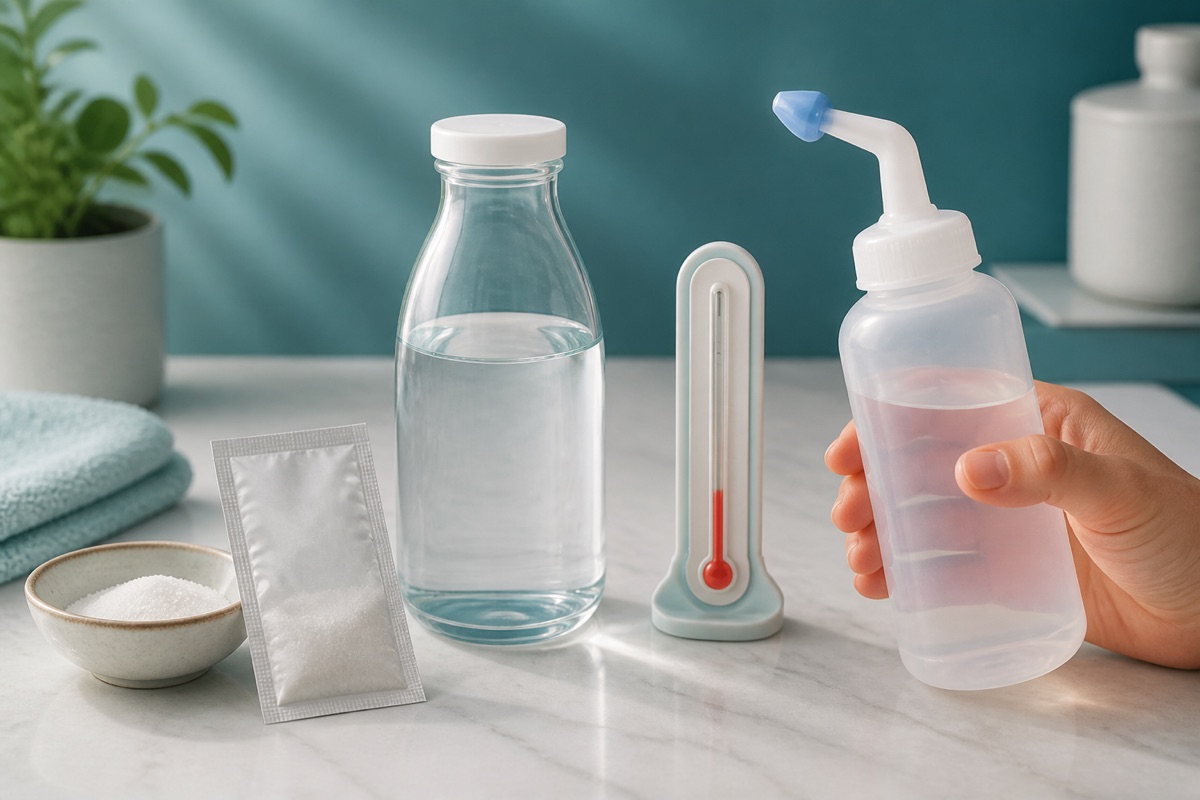
A 0.9% isotonic solution, which has the same osmolarity as plasma, is standard. If the concentration is low, water moves into the mucous membrane cells and causes stinging, while if it is too high, irritation and dryness will occur.
A 1.5-3% hypertonic solution is sometimes used to promote mucus discharge in chronic sinusitis, etc., but it is not recommended for first-time users as it is highly irritating. Since the concentration cannot be reproduced by measuring salt by eye, it is safer to use specially measured powder or commercially available physiological saline solution.
2-2. Temperature — 32-37 degrees
The closer it is to body temperature, the more comfortable it is. Cold solutions can irritate the mucous membrane and cause dizziness, while hot solutions pose a risk of mucosal damage. Drop a few drops on the inside of your wrist until it feels neither hot nor cold.
2-3. Pressure — let the solution flow
If you squeeze hard, fluid can be pushed toward the eustachian tube and middle ear, causing ringing and pain in your ears. If it is a squeeze bottle, it is safe to use a steady force slowly, and if it is a neti pot, it is safe to use gravity.
2-4. Which water is safe
| Available | Not available |
|---|---|
| Commercial saline solution | Untreated tap water |
| Water marked as sterile or distilled on the label | Purifier water and regular bottled water |
| Water boiled for at least 1 minute and cooled | Groundwater/well water |
Severe cases of infection caused by free-living amoeba, which can rarely exist in tap water, introduced through the nasal cavity have been reported overseas. It is an extremely rare but completely preventable risk, so it is best not to compromise on water conditions.
3. Step-by-step method
- Solution preparation — If using a premeasured saline packet, dissolve it exactly in the specified water volume. Check the temperature.
- Posture — Stand in front of the sink, bend your upper body forward about 45 degrees, and tilt your head to the side. Lightly place the tip of the container on the upper nostril.
- Breathing — Open your mouth and breathe through your mouth. When you make the “ah—” sound, the soft palate rises and the nasopharynx closes, reducing the flow of fluid into the throat or eustachian tube.
- Irrigation — Let the solution flow slowly. It comes out through the opposite nostril. A typical amount is 100 to 150 mL per side.
- Repeat on opposite side
- Drain — Gently blow your nose on one side at a time. Avoid blowing both nostrils forcefully at the same time. If you slowly tilt your head from side to side, the remaining solution will flow out. It is normal for a little more water to come out of your nose after a few minutes.
4. Common problems and causes
| Symptoms | Most common cause | Action |
|---|---|---|
| Stinging inside the nose | Inadequate concentration | Use measured powder, check isotonic solution |
| Pain in the forehead and around the eyes | The solution is too cold | Warm it to near body temperature |
| Ear fullness or pain | Excessive pressure, no mouth breathing | Inject slowly, breathe through mouth |
| No water comes out at all | Complete occlusion of that side | Stop for that day and try again after swelling is relieved. |
| Nasal congestion worsens after irrigation | Residual solution, excess frequency | Reduce the number of times and check the discharge posture |
5. Frequency and duration
During symptomatic periods, 1-2 times a day is common. One dose before bed is especially helpful in reducing nighttime nasal congestion.
It has been pointed out that if you do it too many times a day, innate immune components such as lysozyme and lactoferrin contained in the mucus layer can be washed away, so there is no reason to increase it more than necessary. Once symptoms subside, you can reduce the frequency or stop.
Container management is also important. After each use, wash, dry thoroughly, and disinfect according to the manufacturer’s recommended cycle. Containers left wet can themselves become a source of contamination.
6. When to avoid irrigation or ask a clinician
- If you have acute otitis media, ear pain, or otorrhea
- If you have recently had nasal or sinus surgery (follow the method and timing instructed by your medical staff)
- When one nostril is completely blocked and solutions cannot pass through
- If dizziness or ear pain recurs after irrigation
- Cases where it is difficult to protect the airway due to swallowing difficulties or facial nerve paralysis
- Infants: It is less burdensome to start with saline spray rather than the squeeze method.
Frequently Asked Questions
Q. Is it okay to wash my nose every day? A. The typical range of use is once or twice daily during symptomatic periods. However, there is no need to habitually repeat the procedure several times even if there are no symptoms. If irritation or dryness continues after irrigation, it is recommended to reduce the number of times.
Q. Can I use purified water or bottled water? A. Since the degree of microorganism removal varies depending on the water purification method, it is not recommended to use water from a purifier or regular bottled water. Use only commercially available saline solution, water marked as sterile or distilled on the label, or tap water that has been boiled for at least 1 minute and then cooled.
Q. My ears are ringing after nasal irrigation. Can I continue? A. If it is repeated, it is most likely due to high pressure or not breathing through the mouth during irrigation. If symptoms persist even after correcting the method, it is best to stop irrigation and seek medical attention as it is necessary to check the function of the eustachian tube or the condition of the middle ear.
This article is general health information and is not a substitute for individual medical care. If you have an underlying disease or symptoms persist, please seek treatment at a medical institution.